
DSCR Loan Requirements for Real Estate Investors
Understanding DSCR loan requirements is one of the first steps toward financing an investment property. As real estate investors continue expanding their portfolios, Debt Service Coverage Ratio (DSCR) loans have become a popular financing option because they focus on a property's income potential rather than relying primarily on a borrower's personal income.
Unlike traditional mortgage programs that often require tax returns, W-2s, pay stubs, and debt-to-income (DTI) calculations, many DSCR loan programs evaluate whether the property's rental income is sufficient to cover its monthly housing expenses.
Because qualification focuses primarily on the property's cash flow rather than traditional income documentation, DSCR loans can be an attractive option for many real estate investors, self-employed borrowers, and business owners.
If you're planning to purchase or refinance an investment property in 2026, understanding today's DSCR loan requirements can help you prepare for a smoother financing process.
What Is a DSCR Loan?
A Debt Service Coverage Ratio (DSCR) loan is a Non-Qualified Mortgage (Non-QM) financing option designed for income-producing residential investment properties.
Instead of relying primarily on W-2s, tax returns, or employment verification, many lenders evaluate the property's rental income and overall cash flow when determining eligibility.
If you're new to this type of financing, read our What Is a DSCR Loan? guide to better understand how these loans work and whether they're the right fit for your investment goals.
DSCR Loan Requirements
While every lender has its own underwriting guidelines, most DSCR loan programs evaluate several common qualification factors.
1. Debt Service Coverage Ratio (DSCR)
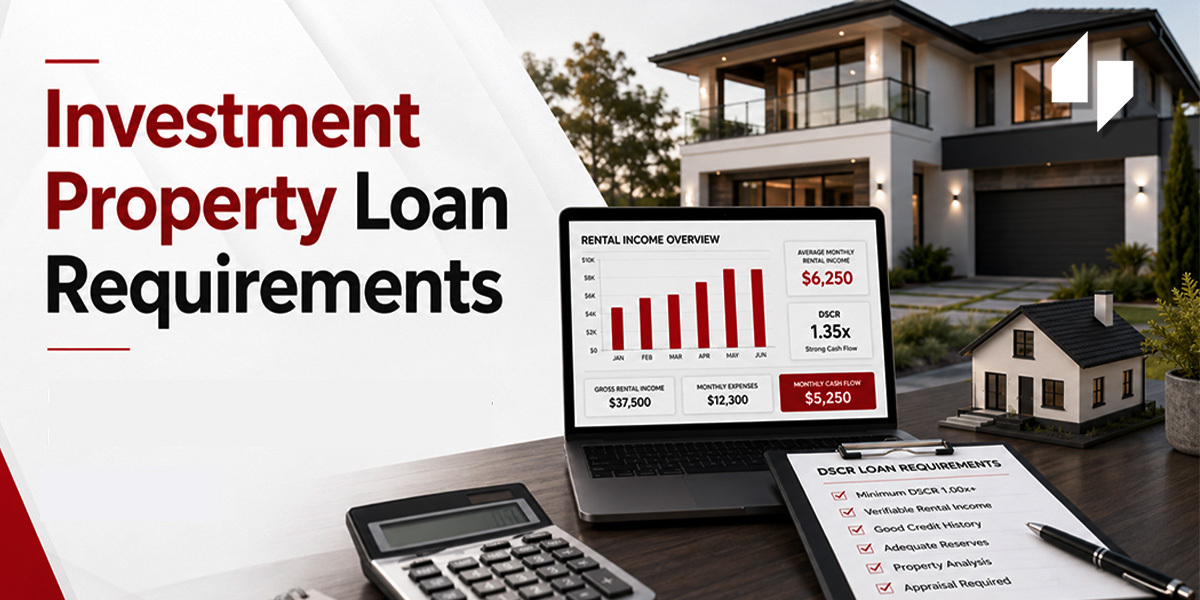
The most important qualification factor is the property's Debt Service Coverage Ratio (DSCR).
The basic formula is:
Monthly Rental Income ÷ Monthly Housing Expense (PITIA)
PITIA generally includes:
- Principal
- Interest
- Property Taxes
- Homeowners Insurance
- HOA dues (when applicable)
Generally:
- 1.00 = Rental income covers the monthly housing expense.
- Above 1.00 = Positive cash flow.
- Below 1.00 = Rental income does not fully cover the monthly housing expense.
Many lenders prefer a DSCR of 1.00 or higher, although acceptable ratios vary depending on the lender, property type, credit profile, and overall loan scenario.
2. Credit Score
Your credit score remains an important part of the approval process.
A stronger credit profile may help you qualify for:
- More competitive interest rates
- Greater financing flexibility
- Improved loan terms
Credit score requirements vary by lender and loan program, so it's helpful to review your credit before applying.
3. Down Payment
Investment properties generally require a larger down payment than owner-occupied homes.
The amount needed depends on several factors, including:
- Property type
- Loan amount
- Credit profile
- DSCR ratio
- Individual lender guidelines
A larger down payment may improve your financing options and strengthen your application.
4. Property Eligibility
DSCR loans are intended for residential income-producing properties.
Eligible properties commonly include:
- Single-family homes
- Condominiums
- Townhomes
- Two- to four-unit properties
- Planned Unit Developments (PUDs)
Some lenders may also finance:
- Non-warrantable condominiums
- Short-term rental properties
- Mixed-use properties
- Portfolio investment properties
Eligible property types vary by lender and loan program.
5. Rental Income Documentation
One of the primary goals of a DSCR loan is to evaluate a property's ability to generate rental income.
Lenders typically verify rental income using one or more of the following:
- Existing lease agreements
- Market rent analysis from the appraisal (Form 1007 or equivalent, when applicable)
- For general tax guidance, review the IRS Rental Income and Expenses guide to understand how rental income and expenses may be reported.
- Rental history, when available
Stable rental income or strong market rental potential can strengthen your overall loan application, depending on the lender's guidelines.
6. Cash Reserves
Many lenders may require borrowers to maintain reserve funds after closing.
These reserves demonstrate your ability to continue making mortgage payments if rental income is temporarily interrupted or unexpected expenses arise.
Reserve requirements vary based on:
- Loan amount
- Credit profile
- Property type
- Individual lender guidelines
Maintaining healthy cash reserves can improve both your approval chances and financial stability as a real estate investor.
Documents You May Need
Many DSCR loan programs offer a streamlined documentation process compared to traditional investment property mortgages. However, lenders still require documentation to evaluate both the borrower and the property.
Typical documentation may include:
- Government-issued photo ID
- Property purchase contract (for purchases)
- Current mortgage statement (for refinances)
- Recent bank statements
- Property insurance information
- Lease agreement, when applicable
Depending on the lender and loan scenario, many DSCR loan programs may not require:
- W-2s
- Pay stubs
- Personal tax returns
- Employment verification
The Consumer Financial Protection Bureau's mortgage resources can help borrowers better understand loan documents, mortgage costs, and important questions to ask lenders.
Tips to Improve Your Approval Chances
Preparing before you apply can make the financing process smoother and may improve your available loan options.
Consider these best practices:
Improve Your Credit Profile
Review your credit report, pay down outstanding balances where possible, and correct any reporting errors before applying.
Save for a Larger Down Payment
A larger down payment can strengthen your application and may improve your financing options.
Choose Properties with Strong Rental Demand
Properties located in desirable rental markets often produce more consistent rental income, which may strengthen your application.
Maintain Adequate Cash Reserves
Having reserve funds available demonstrates financial stability and your ability to manage unexpected expenses.
Compare Available Loan Programs
Not every investment strategy requires the same type of financing. Explore our Loan Programs to compare financing solutions designed for investment properties and choose the option that best fits your investment goals.
Work With an Experienced Mortgage Professional
An experienced mortgage advisor can help you understand lender requirements, compare financing options, and prepare a stronger application.
These steps can improve your financing experience and help you secure more competitive loan terms.
Common Mistakes to Avoid
Many investors unintentionally delay the approval process by making avoidable mistakes.
Some of the most common include:
- Overestimating projected rental income
- Ignoring reserve requirements
- Purchasing properties with weak cash flow potential
- Applying before reviewing their credit profile
- Choosing a lender without experience in investment property financing
Avoiding these mistakes can help create a smoother approval process and reduce unnecessary delays.
Is a DSCR Loan the Right Choice?
DSCR financing can be an excellent solution for many real estate investors, but it's important to understand whether it fits your investment strategy.
You may benefit from a DSCR loan if you:
- Purchasing an investment property
- Prefer qualification based on rental income
- Self-employed or own a business
- Plan to grow your real estate portfolio
- Want an alternative to traditional income documentation
Borrowers purchasing a primary residence will generally need a different type of mortgage program.
Final Thoughts
Understanding today's DSCR loan requirements can help you prepare a stronger application and make more informed investment decisions. While qualification requirements vary by lender, being prepared with strong rental income, a solid credit profile, and adequate reserves can improve your financing options.
Whether you're purchasing your first rental property or expanding an existing portfolio, selecting the right financing strategy is an important step toward long-term investment success.
If you're exploring financing for your next investment property, speaking with an experienced mortgage professional can help you compare available loan options and choose one that aligns with your financial goals.
Already own an investment property? A refinance could help improve cash flow or support your next investment. Get your free refinance quote to explore your available options.
Important
DSCR loan eligibility, documentation requirements, minimum credit scores, down payment requirements, reserve requirements, property eligibility, loan terms, and interest rates vary by lender, property type, borrower qualifications, and current market conditions.