Investment Property Loans: Understanding DSCR Financing
Building wealth through real estate starts with choosing the right financing. Whether you're buying your first rental property or expanding a growing investment portfolio, understanding your mortgage options can make a significant difference in your long-term returns.
While many investment property loans follow traditional underwriting standards, they aren't always the best fit for every investor. Self-employed borrowers, business owners, and experienced investors often look for financing solutions that place greater emphasis on the property's income potential rather than personal income documentation.
One financing option that continues to gain popularity is the Debt Service Coverage Ratio (DSCR) loan. Designed specifically for investment properties, this loan program offers a different approach to qualifying, making it an attractive option for many real estate investors.
Understanding Investment Property Financing
Investment property loans are designed to help borrowers purchase or refinance properties intended to generate rental income. Unlike mortgages for primary residences, these loans focus on the property's ability to perform as an investment.
Among the available financing options, DSCR loans have become increasingly popular because they evaluate the property's cash flow instead of relying primarily on the borrower's personal income.
Most DSCR loans are offered as Non-Qualified Mortgage (Non-QM) programs created for residential real estate investors.
How a DSCR Loan Works
The foundation of a DSCR loan is simple: lenders evaluate whether the property's rental income is sufficient to cover its monthly housing expenses.
Instead of placing primary emphasis on employment income or debt-to-income ratios, lenders typically review:
- Estimated or actual rental income
- Property appraisal
- Market rent analysis (Form 1007 or equivalent, when applicable)
- Existing lease agreements
- Credit profile
- Down payment
- Cash reserves
- Property condition
This alternative qualification method can simplify financing for investors with non-traditional income.
If you're exploring financing options for an investment property, review our Loan Programs to compare available mortgage solutions.
What Does DSCR Mean?
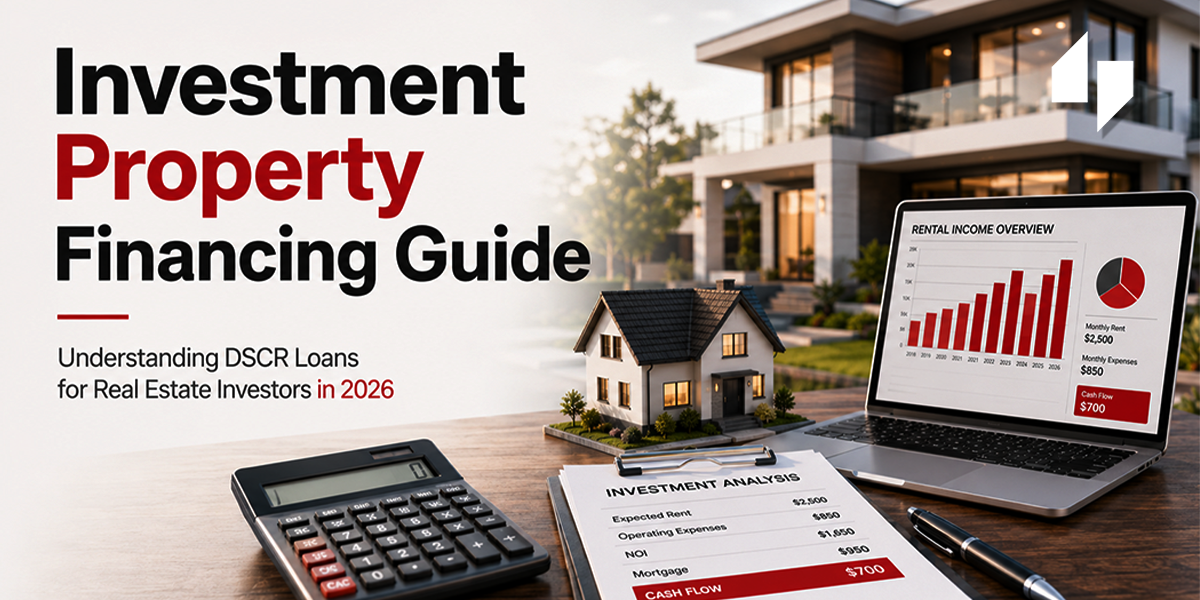
DSCR stands for Debt Service Coverage Ratio, a measurement used to determine whether a property's rental income can support its monthly mortgage obligations.
The calculation is:
Monthly Rental Income ÷ Monthly PITIA
PITIA generally includes:
- Principal
- Interest
- Property Taxes
- Homeowners Insurance
- HOA dues (when applicable)
A ratio above 1.00 generally indicates that the property generates enough income to cover its monthly housing expenses, although program guidelines vary by lender.
Who Benefits Most from a DSCR Loan?
This financing option may be worth considering if you are:
Self-Employed
Business deductions sometimes reduce taxable income, making traditional qualification more challenging.
Growing Your Rental Portfolio
DSCR financing can help investors continue expanding without relying solely on personal income calculations.
Purchasing Through an LLC
Many programs allow eligible borrowers to finance investment properties through business entities, subject to lender guidelines.
Investing in Rental Properties
Whether you're purchasing a long-term rental or, in some cases, a short-term rental property, certain DSCR programs may offer financing solutions that fit your investment strategy.
Eligible Investment Properties
Depending on the lender, DSCR financing may be available for:
- Single-family residences
- Condominiums
- Townhomes
- Two- to four-unit properties
- Planned Unit Developments (PUDs)
Some lenders may also finance:
- Non-warrantable condominiums
- Mixed-use properties
- Portfolio investment properties
Property eligibility varies by lender and loan program.
Why Investors Choose DSCR Loans
Flexible Qualification
Many DSCR programs reduce the need for traditional income documentation by emphasizing property performance.
Portfolio Growth
Instead of qualifying based solely on personal income, investors can often qualify using each property's rental income.
Streamlined Documentation
Many programs may require fewer employment-related documents than conventional investment property loans.
Financing Through Business Entities
Some lenders allow financing through LLCs or other eligible entities, providing additional flexibility for investors.
Important Factors to Consider
Before applying, investors should evaluate:
- Expected rental income
- Credit profile
- Available down payment
- Reserve funds
- Long-term investment strategy
- Overall financing costs
Mortgage rates, fees, documentation requirements, and reserve requirements vary among lenders.
Before selecting a financing option, review resources from the Consumer Financial Protection Bureau (CFPB) to better understand mortgage costs and borrowing responsibilities.
Preparing for a Stronger Application
Although every lender has different guidelines, these steps can strengthen your application:
- Improve your credit profile where possible.
- Maintain sufficient cash reserves.
- Research local rental demand.
- Select properties with strong income potential.
- Organize financial and property documentation before applying.
Understanding rental income reporting can also be helpful. The IRS Rental Income and Expenses guide provides useful information for property owners.
Is This Financing Right for You?
Investment property financing isn't one-size-fits-all.
A DSCR loan may be a good option if you:
- Prefer qualification based on rental income.
- Own or plan to purchase investment properties.
- Are self-employed.
- Want to expand a rental portfolio.
- Need greater flexibility than traditional financing may provide.
If you're financing a primary residence, another mortgage program will generally be more appropriate.
Final Thoughts
Investment property loans offer several financing paths, and DSCR loans continue to be one of the most flexible options for qualifying real estate investors. Understanding how these programs work allows you to make more informed financing decisions while supporting your long-term investment objectives.
Whether you're purchasing your first rental property or growing an established portfolio, selecting the right loan program can help improve cash flow and create new investment opportunities.
If you already own an investment property and are considering refinancing, get your personalized refinance quote to explore financing options that support your investment goals.
Important: DSCR loan eligibility, documentation requirements, credit score requirements, reserve requirements, interest rates, and down payment requirements vary by lender, property type, and borrower qualifications.